Tom Stempel
Vessels
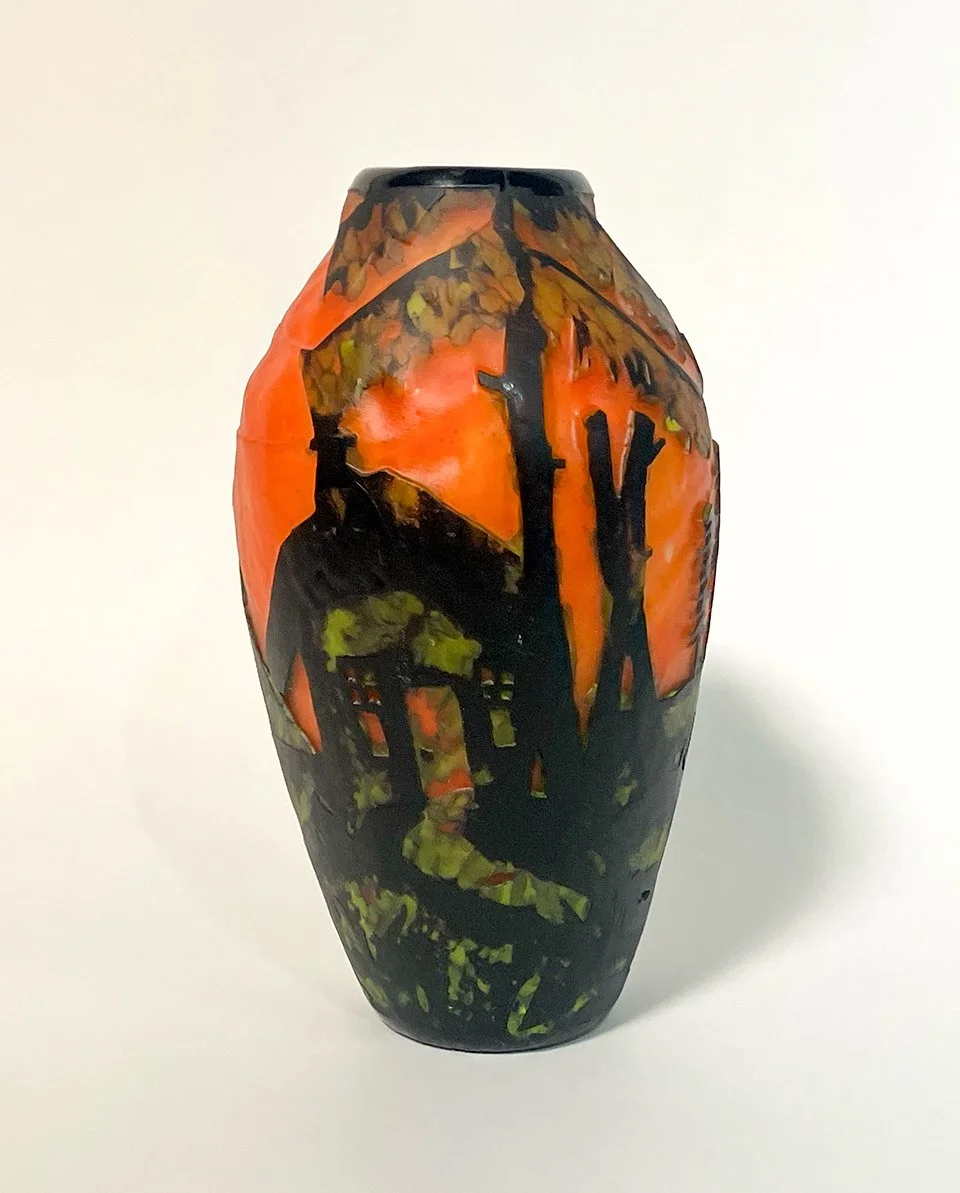
Dimensions: 10 × 5.5 × 5.5”
The cameo forest design in this piece is inspired by living in Hawai’i. Cameo glass is a form of glass art with designs carved through fused layers of differently colored glasses. It has ancient Roman origins and was popularized during the Art Nouveau period around the turn of the Century in France.
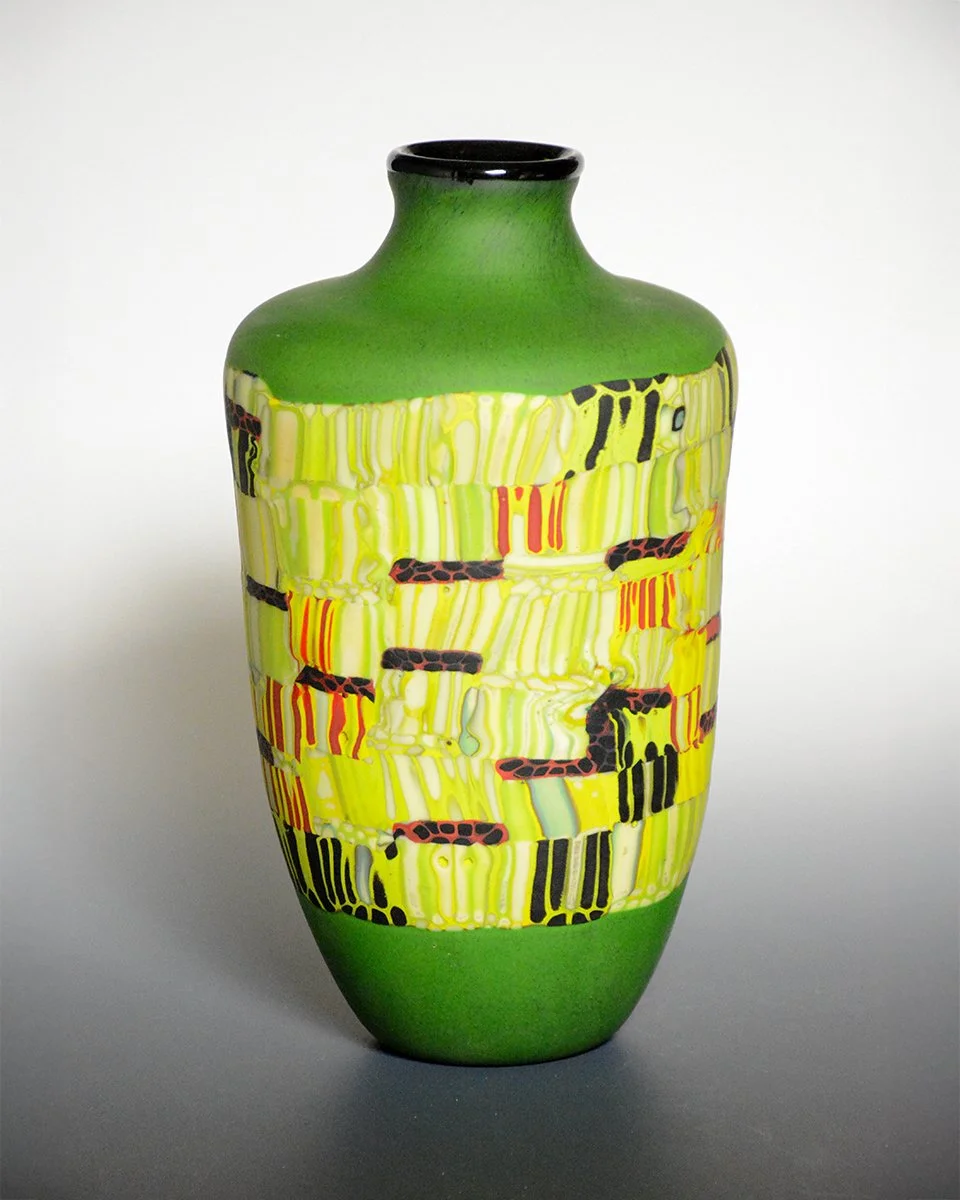
Dimensions: 11.5 × 6 × 6”
This vase is made with a unique color and pattern rolled up hot on a green bubble made from sections of cane- glass rods cut on the bias and in square pieces fused on a hot plate. The pattern is reminiscent of a Gustave Klimt painting.
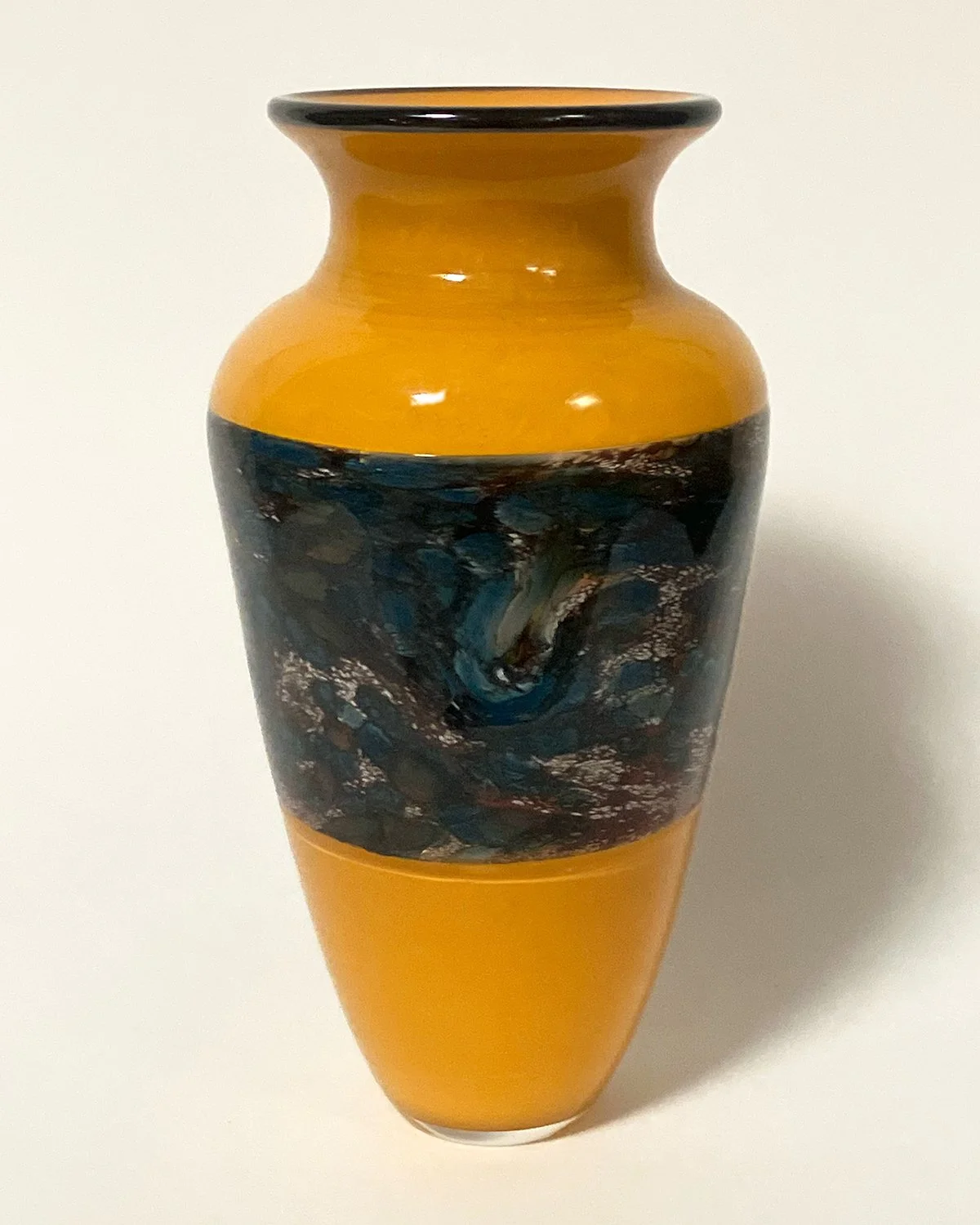
Dimensions: 11.5 × 6 × 6”
This vessel refers to the Italian technique of encalmo—a classical Venetian glassblowing technique in which two separate pieces of glass are fused into a single form. This vase unites three colored rings into one vessel: two gold bands and a central ring made from a combination of crushed colored glass frit.
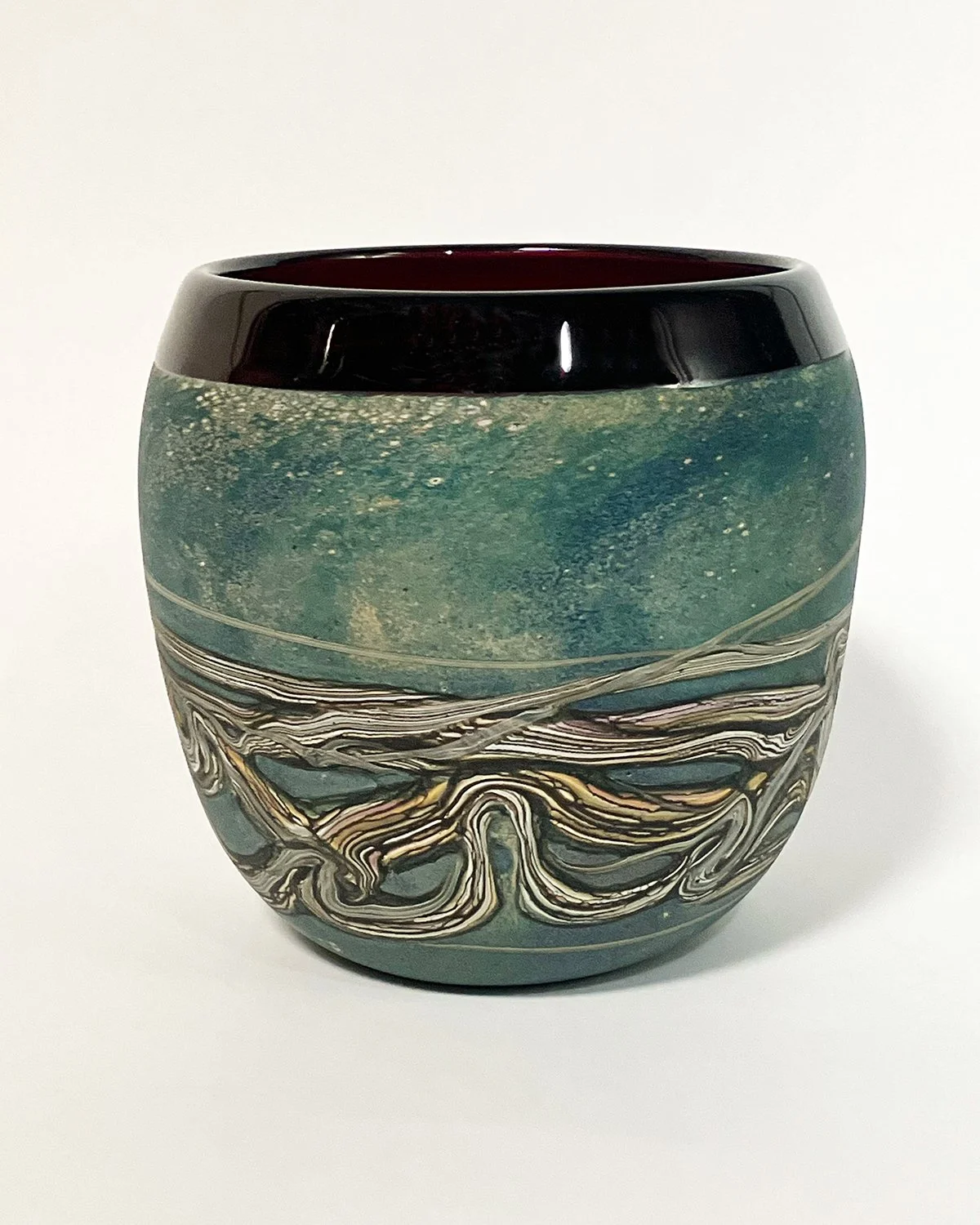
Dimensions: 7.5 × 7 × 7”
Umeke is derived from a Hawaiian word describing a calabash bowl—fusing the Southwestern landscape with Hawaiʻi, travel, and sharing. This vessel is created using the Italian technique of encalmo, a classical Venetian glassblowing method in which two separate pieces of glass are joined into a single form. The ruby-red top, layered colors in the body, and sandblasted finish complete the piece..

Dimensions: 10 × 4.5 × 4.5”
This delicious vase is made with red and black on a chemically reactive color of brown. A black lip wrap tops off the piece.
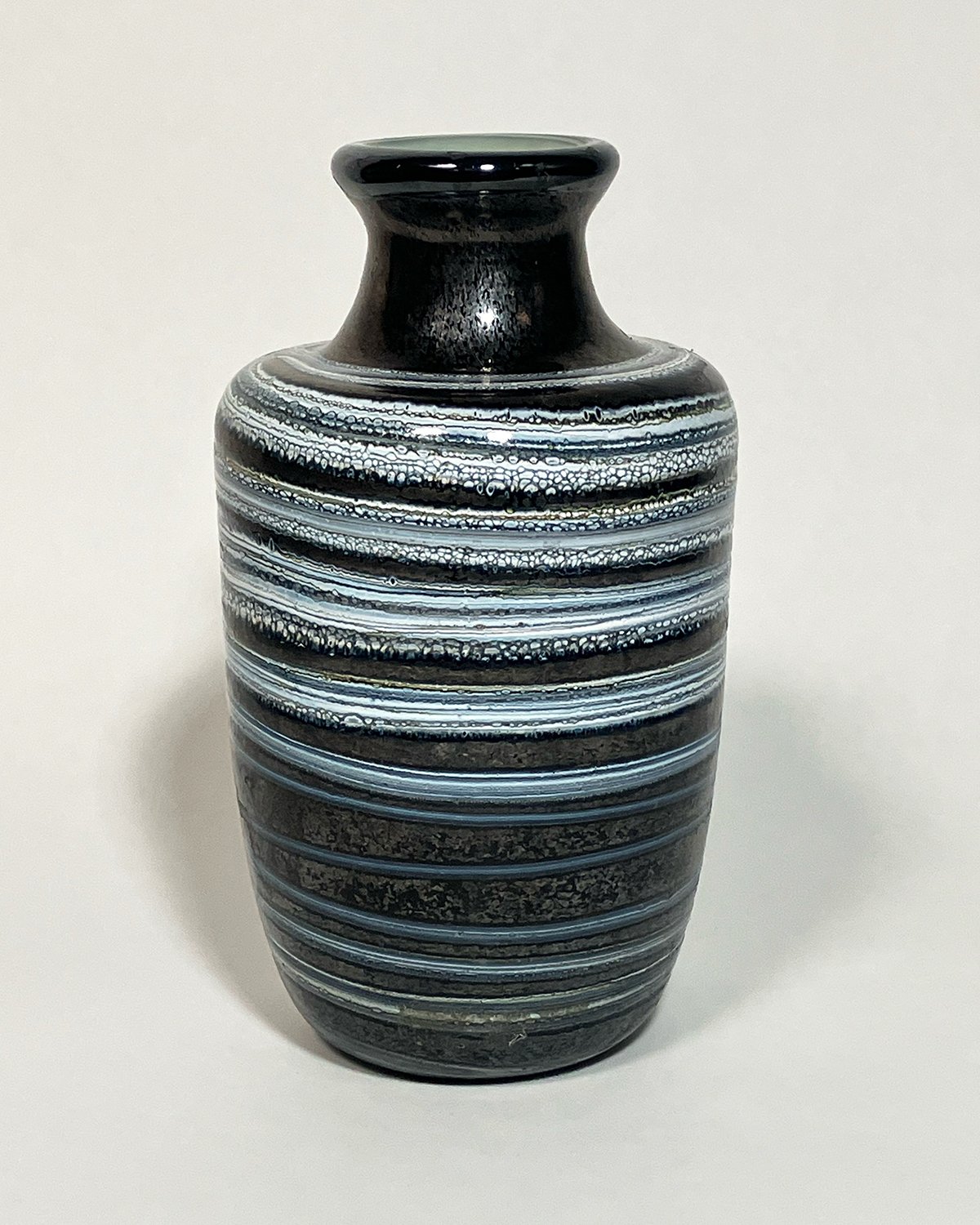
Dimensions: 8.5 × 5 × 5
The iridized base color of this vase is chemically reactive with the white wrap to achieve a textural look when heated and blown.
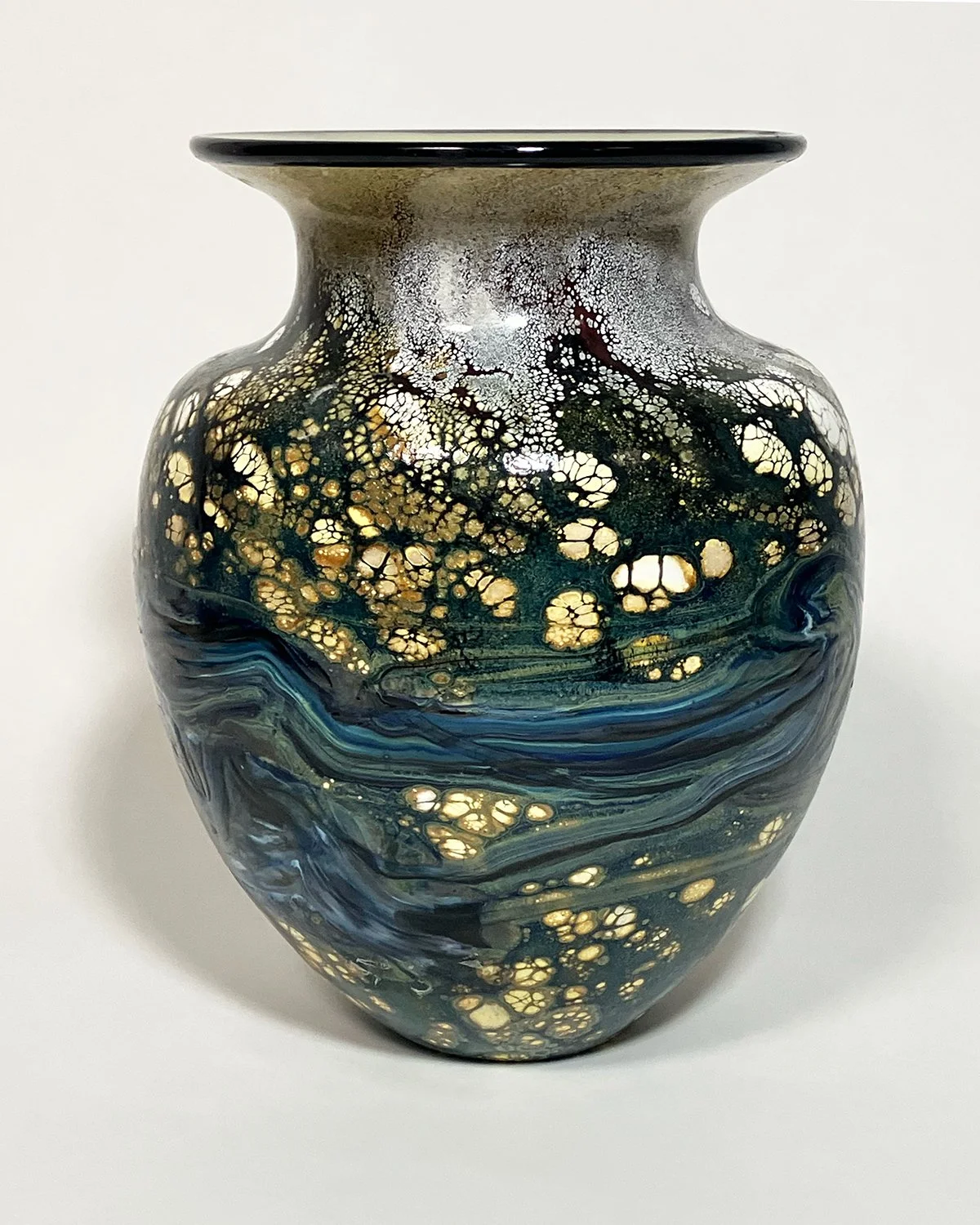
Dimensions: 9.5 × 7 × 7”
Inspired by Vincent van Gogh, who—like many of us—had his own language of mark-making, this vase features a black-and-white textured design created with chemically reactive glass colors, with an additional color band wrapped around the mid-section.
Dimensions: 8 × 6 × 6”
This beautiful hand-blown green vase is made using a complex pattern of fused square cane. Cane are colored glass rods that are cut on the bias, assembled into a pattern, and fused together flat on a hot plate. Then, a long green glass bubble is rolled hot over the fused glass pattern and blown out to form the vase.